
Investigation
“Truth is the casualty”: How Indian fact-checkers debunked false claims during the India-Pakistan crisis
A month’s worth of misinformation bombarded social media within a few hours,” says fact-checker Uzair Rizvi. Many falsehoods were reported on TV as well.

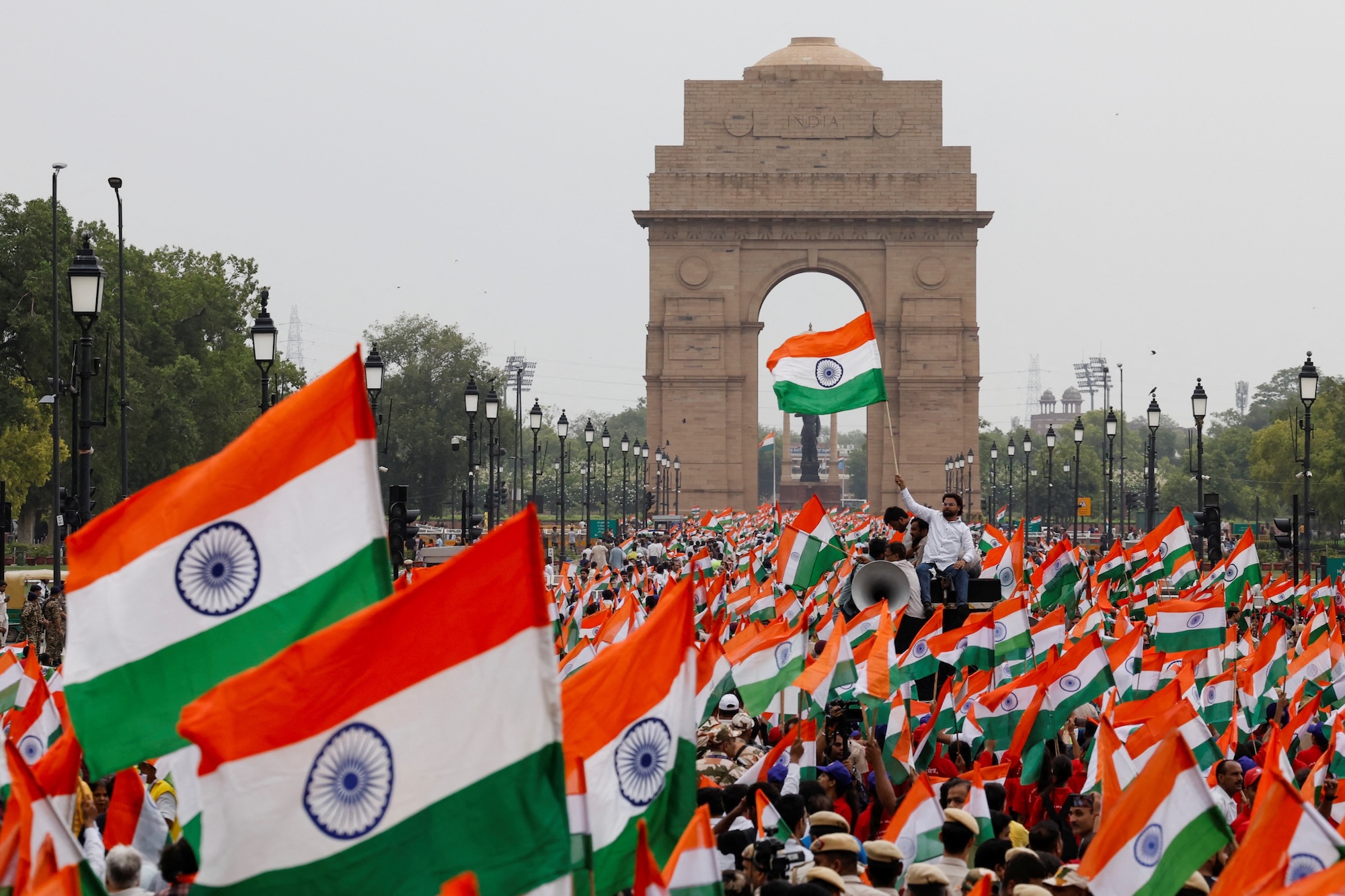
Many Indian television channels looked like an animated video game, with graphics and crude sounds, from 7 to 10 May, when India and Pakistan dropped air missiles on each other before what looks like a temporary pause in violence now.
On 9 May, Times Now Navbharat, an Indian Hindi news channel which claims to be one of the most widely watched in the country, carried a peculiar piece of news.
The screen showed barbed wire at the bottom, a soldier with a machine gun in his hands, a tank moving ahead menacingly, and Prime Minister Narendra Modi standing tall on the left-hand side. “Indian forces enter into Pakistan,” the Hindi text read on a bold red backdrop. Fighter jets swooshed on the screen and an excited anchor’s voice boomed over it. “Indian forces have entered Pakistan,” he echoed, clapping his hands in excitement. “We have entered Pakistan”
This visual cut to seven panelists, each in an on-screen box. While one female panellist gave a thumbs up, another person opened his arms like an athlete winning a game and the main anchor cheered on with clenched fists. “Now it would be a lot of fun if the Navy set fire to the Karachi port,” the anchor said.
Then the channel showed what they claimed was footage from Pakistan’s port city of Karachi. Several TV channels carried the news of India having “invaded” Karachi. Some even said that the Indian army had invaded Islamabad and bombed the city of Lahore.
All of these reports turned out to be false.
While it is true that India and Pakistan used their respective air forces to launch missiles into each other’s territory, neither crossed the border into another’s territory. Both countries share 70 years of hostilities and have fought four wars. In the past decade alone, they have locked horns at least three times.
The latest escalation of violence came after gunmen killed 26 tourists in a meadow in Indian administered Kashmir. India blames Pakistan for the attacks, an allegation Pakistan denies.
Journalists and neutral observers across the world have noted how dangerous it could be for India and Pakistan to be in a state of war, not only because they possess nuclear weapons but also because it may drag in other regional powers such as China and Turkey.
That did not stop social media, TV channels and YouTubers from spreading false claims during the four days of military action, which the Indian government called Operation Sindoor.
“I have observed misinformation surrounding Gaza, Ukraine and Palestine, but since those were longer conflicts that escalated over months, the misinformation trickled out over several days,” said Uzair Rizvi, a Delhi-based fact-checker and media literacy trainer. “This situation felt as if a month’s worth of misinformation bombarded social media within the first few hours. By the end of 7 May, I had examined about 70 unique posts of misinformation. Considering all these posts were shared thousands of times, the extent of misinformation was immense,” he added.
Unapologetic about spreading fake news
As fact-checkers began calling out fake news on Indian social media, many Indian accounts began defending themselves on X. “They are delusional and unapologetic,” said Pratik Sinha, co-founder of fact-checking website Alt News.
“In any conflict, the purpose of Information Warfare is clear: to confuse, mislead and break the thinking of the enemy,” said an X account with almost 100,000 followers on the kind of disinformation they were spreading. “We will do this… and do it again and again. So keep these teachings of ‘credibility’, ‘free speech’ and ‘morality’ to yourself.”
Some Indian right-wing accounts even praised each other for wilfully spreading false information. “The crux of the argument here [was] that Pakistani media was running false information, so Indian media shouldn’t be blamed for running false information,” said Sinha on X.
Major Gaurav Arya, editor-in-chief of a right-wing think tank, took to X to explain how this is an era of “propaganda” and even referenced Nazi minister Joseph Goebbels.
Fake news was spread with so much impunity that even the government agencies began issuing fact checks on their official X accounts. In a statement, the Network of Women in Media said: “Several media outlets ignored even the Indian government’s official clarifications… that debunked such footage as outdated or manipulated.”
Anatomy of a crisis
In order to learn what happened during those four days of violence between India and Pakistan, it is important to understand how false claims and misleading narratives were spread the previous time there was such violence between the two countries.
On 14 February 2019, a suicide bomber attacked an Indian army convoy and killed 40 soldiers in Pulwama district of Indian Kashmir. In retaliation, the Indian air force bombed an alleged training camp of Jaish-e-Mohammad, a terrorist group, in Balakot, Pakistan.
At the time the Indian government claimed they had killed 300 alleged terrorists. But the Reuters news agency used satellite images to report that the training camp was exactly as it was. “The images are virtually unchanged from an April 2018 satellite photo of the facility,” the Reuters report said. “There are no discernible holes in the roofs of buildings, no signs of scorching, blown-out walls, displaced trees around the school or other signs of an aerial attack.”
There were no videos from Pakistan of any casualties or damage either.
This time, fact-checkers said, as soon as India launched the attack, Indian authorities held press conferences to show images which detailed the impact of the strikes.
“This somehow satisfied Indian audiences. They didn’t feel the need to rapidly generate fake information. Indian social media took a back seat at this point,” said Jency Jacob, Managing Editor of BOOM, a fact-checking website.
However, Jacob told me that misinformation surged on 7 May, in the early hours of the Indian attack, with Pakistani X accounts posting fake videos of air strike sites and damaged buildings. On the next day all hell broke loose on the Indian side as well.
24-hour news thrives on adrenaline-driven stories. So this might be the reason why many TV channels showed some of these false claims. Jacob, who has worked for leading TV channels in the past, said that the channels may have not been happy with the limited flow of information from the government. “They come under pressure from millions of voyeuristic audiences,” he said.
That’s when Indian TV channels began claiming that Indian forces had entered Pakistan.
This time around, Sinha from Alt News said, it became very clear that the news media were primarily addressing audiences in their own country. “Truth is the casualty,” he said, while emphasising that the media is not trying to unearth facts or hold its own governments to account but just trying to cater to the emotions of the masses.
Fake news mainly generated on X, said Rizvi, the Delhi-based fact-checker, “but what originated on X then seeped into TV channels, Facebook, WhatsApp, and Instagram.”
This time, fact-checked news also followed the same path, said Sinha from Alt-News: “Our fact-checks also trickled into WhatsApp and other YouTubers began quoting us.”
Blocking credible sources
The misinformation problem was exacerbated when some credible news sources were blocked by Indian authorities.
Immediately after the attack on tourists on 22 April, the Indian government blocked about a dozen Pakistani YouTube channels, including those of established news outlets like Dawn.
Then, when air missiles were being launched into each other’s territories, the Indian government ordered X to block local access to about 8,000 accounts belonging to influential Pakistanis, Kashmiris and some Indians too. X reluctantly agreed to comply.
Online censorship was not enough. Indian authorities arrested freelance journalist Hilal Mir calling him a “radical social media user” and accusing him of disseminating “extremist/distorted content with an intention to disturb peace,” according to a report in the Kashmir Times, whose editor-in-chief Anuradha Bhasin also had her X account suspended.
Another Kashmiri journalist, Rejaz M. Sheeba Sydeek, has reportedly also been arrested for an online post criticising India’s moves against Pakistan.
Independent news outlet The Wire, was blocked for about 24-hours. Eventually, the block was lifted after the outlet agreed to take down an article reporting Pakistan’s claim to have shot down a French-made Indian fighter jet. The Wire called the order “unfair.”









Extortion
Italy targets deficit to fall to 3% this year despite sluggish growth
Italy will cut its budget deficit to 3% of national output this year, the government said on Thursday,

ROME (Reuters) -Italy will cut its budget deficit to 3% of national output this year, the government said on Thursday, below a previous target of 3.3% and inside the European Union’s 3% ceiling for the first time since 2019, before the COVID-19 pandemic.
The fiscal consolidation should allow Giorgia Meloni’s government to exit an EU infringement procedure for countries running excessive deficits by mid-2026, provided Brussels is convinced that Rome’s improved finances can be sustained in coming years.
The procedure restricts offending countries’ flexibility with regard to taxation and spending policies, as they must cut their fiscal deficit by a prescribed amount each year.
Rome’s 2026 budget framework approved at an evening cabinet meeting said the deficit would fall to 2.8% of gross domestic product (GDP) next year, confirming a previous target set in April.
“We are confirming the line of firm and prudent responsibility that takes into account the need to maintain public finance stability,” in compliance with European rules, Economy Minister Giancarlo Giorgetti said in a statement.
(Reporting by Giuseppe Fonte and Gavin Jones)
By Giuseppe Fonte and Gavin Jones
Investigation
Failed Founder or Fake Whistleblower? The Curious Case of Sandeep Gudapati of Eviris Health and Hitesh Bang of Parampara ( Flavours Of India )
Failed Founder or Fake Whistleblower? The Curious Case of Sandeep Gudapati and Hitesh Bang

What defines a founder—resilience or revenge? Most entrepreneurs, after facing rejection from an investor, return to the drawing board, refine their pitch, and fight harder to raise funds. But a few, instead of rebuilding, choose to attack the very investors who turned them down.
This is the story of Sandeep Gudapati, Director of Eviris Health Services Pvt. Ltd., a decade-old health-tech startup with little to show for its existence. Once hailed as a promising founder, Sandeep today appears more like a frustrated entrepreneur—or worse, a self-styled whistleblower with questionable credibility.
A Startup Without Growth
Eviris Health was launched in 2015, but even after 10 years, industry trackers find no visible growth, no market impact, and no investor confidence. Our investigation into the company’s bank statements and credit history revealed a troubling picture: mounting debts and weak financial standing.
We have also made the credit History of Sandeep public, Download Now
We will soon make the bank statements Public after regulatory Approval
Please do decide, how an Investor may have entertained Sandeep
Employees too have reportedly faced delays in salary payments, while the company has changed its office address three times, raising further doubts about its stability.
A Shadowy Public Profile
Adding to the intrigue, Sandeep’s public presence is almost non-existent. Apart from a single display picture across his social media profiles, no verified photographs or appearances are available in the public domain.
On LinkedIn and Twitter, Sandeep’s activity revolves almost entirely around one subject—attacking Foxhog Ventures. Initially, his posts drew some engagement, but the response has since dwindled.
His frequent claim? That Foxhog operates without RBI or SEBI licenses. But experts call the accusation baseless: “Why would a foreign VC firm need Indian banking licenses when it doesn’t operate as a bank?”
The Hyderabad Connection – Enter Hitesh Bang
Our investigation soon unearthed another character—Hitesh Bang, a Hyderabad-based businessman who runs the restaurant Parampara.
- Hitesh filed an FIR against Foxhog, but the contents raised eyebrows—it merely stated that he “felt bad because Foxhog rejected his funding application.”
- Despite the flimsy nature of the complaint, Foxhog had to secure bail and has since moved the Hon. Court for quashing of the FIR.
- Sources allege Hitesh’s involvement in hawala transactions, with his restaurant serving as a suspected meeting ground for illicit financial settlements.
Credit History of Hitesh Bang is available for the Public: Download Now
Debt records show Hitesh, too, is under financial stress, with businesses largely dependent on loans.
The Legal Web
Court records further expose the troubled past of both men:
- Sandeep Gudapati faces six cases—three filed by Foxhog, one by Rohit Dewan, and two by lenders for alleged bank fraud. At least one FIR order is currently pending, with cases at the evidence stage.
- Hitesh Bang has three cases pending—two from Foxhog and one from Anita Sharma alleging extortion and blackmailing.
- In addition, Hitesh’s restaurant faces seven consumer complaints over poor service and mismanagement.
- The Bigger Picture
This is no longer the story of a frustrated startup founder. It’s a web of debts, legal disputes, hawala links, and a targeted campaign against any Investor.
Foxhog, meanwhile, continues to expand, we are also investigating against Foxhog and will soon publish the report.
Our team has already released credit histories and will soon make public further bank transaction details and photographic evidence linked to hawala settlements by Hitesh Bang, pending regulatory clearance.
Unanswered Questions
Repeated questions sent to Sandeep Gudapati remain unanswered. Until then, his image as a “fake whistleblower” seems to overshadow his identity as a “health-tech founder.”
The bigger question remains for India’s startup ecosystem:
👉 Will frustrated founders keep chasing investors, or will they focus on building what they once promised?
This article will be amended from time to time as many reports about Sandeep, Hitesh, and Foxhog are still awaiting a response from many government and Private agencies.
Investigation
Singer Zubeen Garg died in Singapore while swimming, not during scuba diving: report
The Singapore Police Force had earlier ruled out foul play in the death of the 52-year-old singer
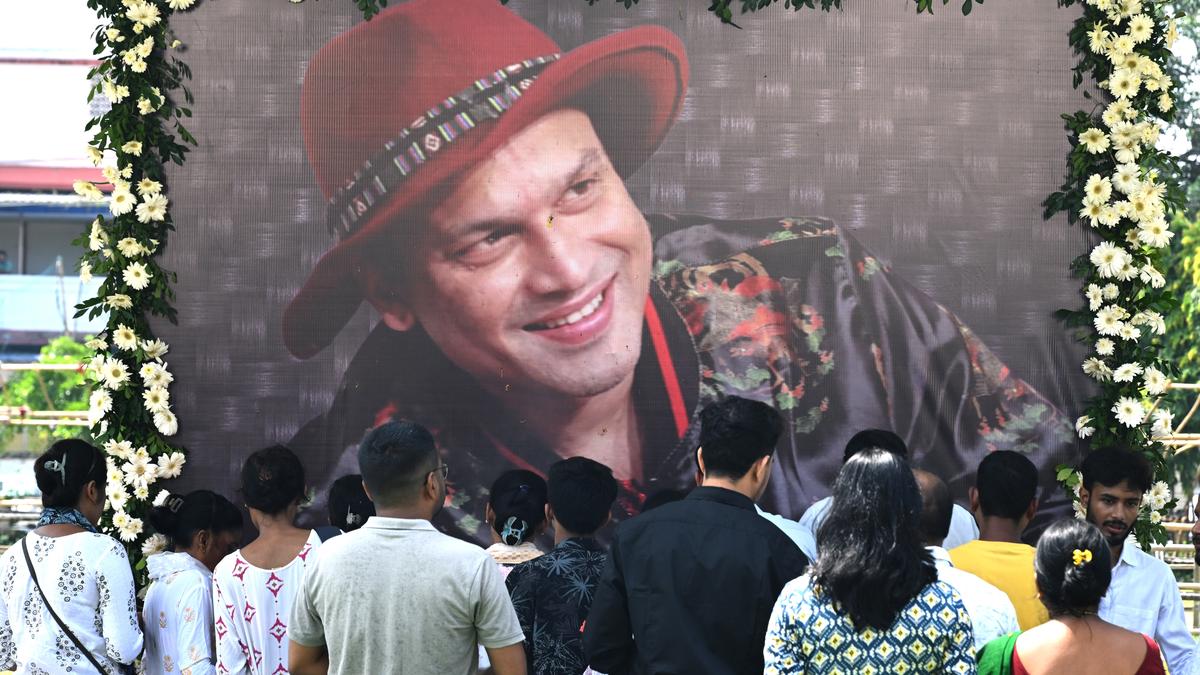
Singer-musician Zubeen Garg died due to drowning while swimming off a Singapore island and not while scuba diving as reported earlier, media reports said Thursday (October 2, 2025).
Assam-based Garg, who was in Singapore for the 60th year of India-Singapore Diplomatic Relations and to celebrate India ASEAN Year of Tourism, North East India Festival, died on September 19.
Zubeen Garg’s family files complaint with Assam CID, wants his death probed

The Singapore Police Force (SPF) said they have extended a copy of the autopsy report, along with its preliminary findings on Garg’s death, to the High Commission of India, upon its request, The Straits Times newspaper reported.
The Indian High Commission says it has received the report. According to a source, the report says that Garg died due to drowning.
The SPF had earlier ruled out foul play in the death of the 52-year-old singer.
“In the case of Zubeen Garg, a coroner’s inquiry could possibly shed light on the sequence of events leading up to his drowning,” the Singapore broadsheet quoted Ng Kai Ling, associate director at LIMN Law Corporation here, as saying.

Italy targets deficit to fall to 3% this year despite sluggish growth

Failed Founder or Fake Whistleblower? The Curious Case of Sandeep Gudapati of Eviris Health and Hitesh Bang of Parampara ( Flavours Of India )

Singer Zubeen Garg died in Singapore while swimming, not during scuba diving: report

UK Government seeks to tackle the “fake news” problem

Social media ban: 6 countries that don’t let you use Facebook, Instagram, Twitter or WhatsApp

Journalism or Extortion? Inside the Alleged extortion Racket of India’s “The Head and Tale media”
UK Government seeks to tackle the “fake news” problem
Social media ban: 6 countries that don’t let you use Facebook, Instagram, Twitter or WhatsApp
Journalism or Extortion? Inside the Alleged extortion Racket of India’s “The Head and Tale media”
-
 Fake Journalism10 years ago
UK Government seeks to tackle the “fake news” problem
-
 Fact Check12 months ago
Social media ban: 6 countries that don’t let you use Facebook, Instagram, Twitter or WhatsApp
-
 Alleged Journalism12 months ago
Journalism or Extortion? Inside the Alleged extortion Racket of India’s “The Head and Tale media”
-

 Fact Check2 years ago
How misinformation about Israel and Gaza has evolved in the yearlong war
-
 Fact Check1 year ago
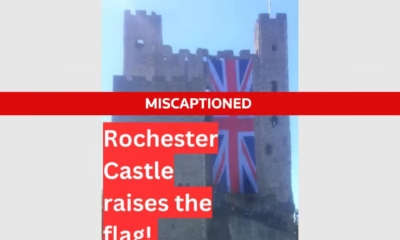
British castle flew Union Jack for VE Day, not flag-raising trend in August 2025
-

 Fact Check9 years ago
How to run a mission-based organisation: Lessons for newsrooms from Doctors Without Borders
-

 Investigation9 years ago
9/11 was avenged on us.
-

 Reports12 months ago
Heated UN Clash: Pakistan Confronts Israel at UN Over Osama bin Laden and State Terrorism