Fact Check
How to run a mission-based organisation: Lessons for newsrooms from Doctors Without Borders
UK Executive Director Dr Nathalie Roberts on balancing the mission with the mundane, fostering healthy workplace culture and setting boundaries


Newsrooms and humanitarian organisations have something in common: staff rarely join for the paycheck. They commit to demanding, sometimes dangerous work, usually for less pay than they could earn elsewhere. They put up with difficult hours, high stakes, and emotional strain, often because they are motivated by a desire to contribute to a broader social mission.
For journalists, that mission is to provide the public with reliable information about what is happening in the world. For NGOs like Doctors Without Borders (Médecins Sans Frontières, MSF), it’s to provide urgent medical care to people in crisis. In both cases, that dynamic poses a particular set of challenges for those steering the ship.
Dr Nathalie Roberts is the Executive Director of MSF UK. She joined the organisation in 2012 after working as an emergency doctor in Britain’s NHS, and has since coordinated operations in conflict and crisis zones across Africa, Asia and the Middle East, including in Syria, Yemen, Ukraine, Pakistan, the Philippines, Ethiopia and the Central African Republic. In 2016 she became Head of Emergency Operations for MSF in Paris, overseeing MSF’s emergency response programmes worldwide. She was named Executive Director of the UK branch in 2022.
I spoke with Roberts about what it takes to run a mission-based organisation, and what newsroom leaders can learn from her experience.
On balancing mission with the mundane
One reality of running a mission-based organisation is that while the broader purpose may be inspiring, much of the daily work is not. Like all organisations, these places depend on a healthy dose of administrative, procedural, and logistical tasks that are often a bit mundane.
“People often join the organisation because they believe in our social mission,” Roberts says. “But if you’re running a humanitarian operation, the reality is that there’s a huge amount of day-to-day bureaucracy that needs to be done – stuff that seems quite boring, but is essential because the risks are particularly high in this work,” she says, referring to the safety protocols for staff and patients, and the careful oversight of donated funds needed to avoid risk of fraud or mismanagement of finances.
“That means that I actually need people on the team who are quite pedantic about the details.”
Roberts notes that new recruits often arrive with a “save the world” vision and find themselves discouraged within a few months, when the reality of their role turns out to be largely administrative.
“The way I’ve found to get people through that dip is to actively talk about the social mission, a lot,” she says. “But talking about the general mission isn’t enough. You also need to make sure you are linking everybody’s specific job to that mission, so everyone can see how they have their role within that.”
What you don’t want, she says, is a dynamic where there are “the special people” – in MSF’s case, the doctors on the frontlines, and in newsrooms’ cases, the star correspondents or investigative reporters – who are “out there” doing the “real work”, while those in more administrative or support roles are treated as an afterthought, even if unintentionally or subconsciously. In MSF’s case, those support roles might be teams in fundraising or logistics, while in a newsroom, it might be those working in copyediting, distribution, or fact-checking.
To counter this, Roberts makes sure that “people get regular updates about MSF’s impact, and that all the managers at different levels of the organisation translate that impact to their specific teams’ work.”
On creating a healthy workplace culture
In both humanitarian work and journalism, another risk is that the mission starts to blur the line between personal and professional responsibility. Roberts is clear about the importance of work-life balance in this context, just like in any other organisation.
“It’s important to be clear that despite the mission, it is also just a job, whether you’re at a desk in London or operating in the field in the Central African Republic. Everybody is paid a salary – it’s not the best salary in the world, but everyone is paid to do a job, just like any other job,” Roberts says. “We therefore expect a certain level of performance, but as employers we also have a responsibility to make sure our staff are able to disconnect at the end of the working day – and that should be true no matter how stressful the situation you are working in is.”
As the Executive Director, she emphasises that part of her role is to set that culture from the top. “Of course, I can’t be the one saying ‘Okay, you should go home now’ to every individual person at their desk. But I have to set that culture – and I also then need to make sure that there are structures in place to allow it to actually happen, which are respected all the way through the managerial line.”
Here, she cites MSF’s increasing focus on vicarious trauma training, and newly instated compulsory team sessions after particularly distressing events, like the death of a board member in Gaza last year. “It’s part of creating that culture where it’s not a shameful thing to say you feel upset.”
She also makes it clear that you don’t have to be working as a surgeon on the frontlines to want a break from the stress of the job: “People [in the London office] can sometimes feel guilty about saying, ‘I’ve got to go and pick up my kids from school now,’ or complaining about working on a bank holiday, while knowing that others are living through trauma,” she explains. “So you have to be super explicit at the top level and that anyone can feel [that they need to disconnect] at times, regardless of what role they’re in.”
On delegation
Roberts also points out that being attuned to boundaries is important not just for staff, but for leaders themselves. “When I first came into this role, my colleagues from previous roles would still be contacting me and expecting me to be able to do something about a problem they were facing now that I was the Director.”
She quickly realised this was unsustainable. “I try to make sure that I’m directing them to the right place, rather than me taking it all on myself, because actually, that makes the problem worse. If I’m taking on every individual problem, then I won’t be able to raise my head above water to get that temperature check of what’s going on in the organisation as a whole.”
Roberts notes how she has seen leaders who become enmeshed in every individual detail lose the wider perspective needed to steer the organisation as a whole. “You have to set boundaries. It’s the only way you can have any longevity as a leader,” she says.
She contrasts this with her previous role as Head of Emergencies at MSF, where being on call 24 hours a day was inherent to the role: “I don’t know anybody who’s managed to do that job for more than three years, at least not without some long breaks built in,” she says.
At the same time, she notes that leaders can’t retreat too far from the frontline either.
“As the Director, part of my job is to understand what MSF’s social mission is and should be today. I do that by receiving debriefings from my teams, attending meetings, and visiting sites – because sometimes you can’t really understand a situation from a bullet point summary,” she says. “It can be really difficult to fit that in with the fact that I also need to attend regular board meetings, run management team meetings, and speak to the press, but it’s important to keep that connection to the fieldwork.”
One solution she has found has been creating a Deputy role to her position, a role which didn’t exist before her leadership. “It means she can step in when I am away, which allows me to spend time on the broader things outside of the day-to-day business.”
The relationship does require some work and intentional communication to make sure both of them are in step with each other, and Roberts emphasises that mutual trust is required to make it work: “I trust the decisions she makes while I am away, and it’s also important that when I come back, I support her decisions, rather than going, “I wouldn’t have done it quite that way.”
Another delegation initiative that MSF UK has launched under Roberts’ leadership is the Staff Forum, a mechanism where staff get together to raise concerns about workplace problems, and, crucially, to collectively propose solutions to those problems. A member of the leadership team attends to listen, but does not propose solutions; the staff instead identify potential actions themselves, and highlight where they might need the management’s support to implement those.
“It’s still in its early days, but it’s been a good way of creating a culture where people try to identify solutions as a team, rather than escalating every problem upwards.”




Fact Check
India vs Pakistan LIVE Updates, Asia Cup 2025: Dubai Pitch And Weather Report Out, Forecast Says…
After a big nine-wicket victory in their opening match against UAE, Suryakumar Yadav and co will be eager to claim another win over the arch-rivals Pakistan.

India vs Pakistan Live Updates, Asia Cup 2025: Team India will face Pakistan in the Asia Cup 2025, Group A match on Sunday in Dubai. After a big nine-wicket victory in their opening match against UAE, Suryakumar Yadav and co will be eager to claim another win over the arch-rivals Pakistan. On the other hand, Salman Ali Agha and co will be coming to this match after a 93-run victory over Oman. Amid all the boycott calls due to the Pahalgam terror attack, the players are focusing on the game, in order to bring out yet another nail-biting encounter between the two teams. Head coach Gautam Gambhir has reportedly had a big role to play already in settling some Indian nerves ahead of the Pakistan clash. (Live Scorecard)
Alleged Journalism
Hong Kong developers test homebuyer sentiment as residential market outlook improves
Developers are now testing the waters” by pricing new projects at market rates, aligning with average prices in nearby developments or slightly higher, said Joseph Tsang, chairman of JLL Hong Kong. “But it seems like the market is still expecting more discounts, as sentiment has yet to recover, which is reflected in the sales performance.”

Two major residential developments in Hong Kong saw tepid sales over the weekend despite a slow recovery in the city’s property market, showing that buyer sentiment has yet to fully rebound even as developers strive for higher profit margins amid a stabilisation in home prices, according to analysts.
“Developers are now testing the waters” by pricing new projects at market rates, aligning with average prices in nearby developments or slightly higher, said Joseph Tsang, chairman of JLL Hong Kong. “But it seems like the market is still expecting more discounts, as sentiment has yet to recover, which is reflected in the sales performance.”
In the first round of sales on Sunday, Henderson Land Development sold 76 of the 148 units as of 3.30pm at its To Kwa Wan Road redevelopment project, Highwood Phase I. The units were priced at an average of HK$18,179 (US$2,336) per square foot, exceeding the HK$17,968 per square foot for the first 30 units released in 2023 at the nearby Uptown project developed by Yu Tai Hing.
Fact Check
Belgian councillor did not call for Belgians to leave Belgium or Europe
A 25-second video clip of Saliha Raiss speaking at a council meeting in Molenbeek-Saint-Jean on August 27 was shared on Instagram with the claim she’d called for a “Europe without Europeans”.
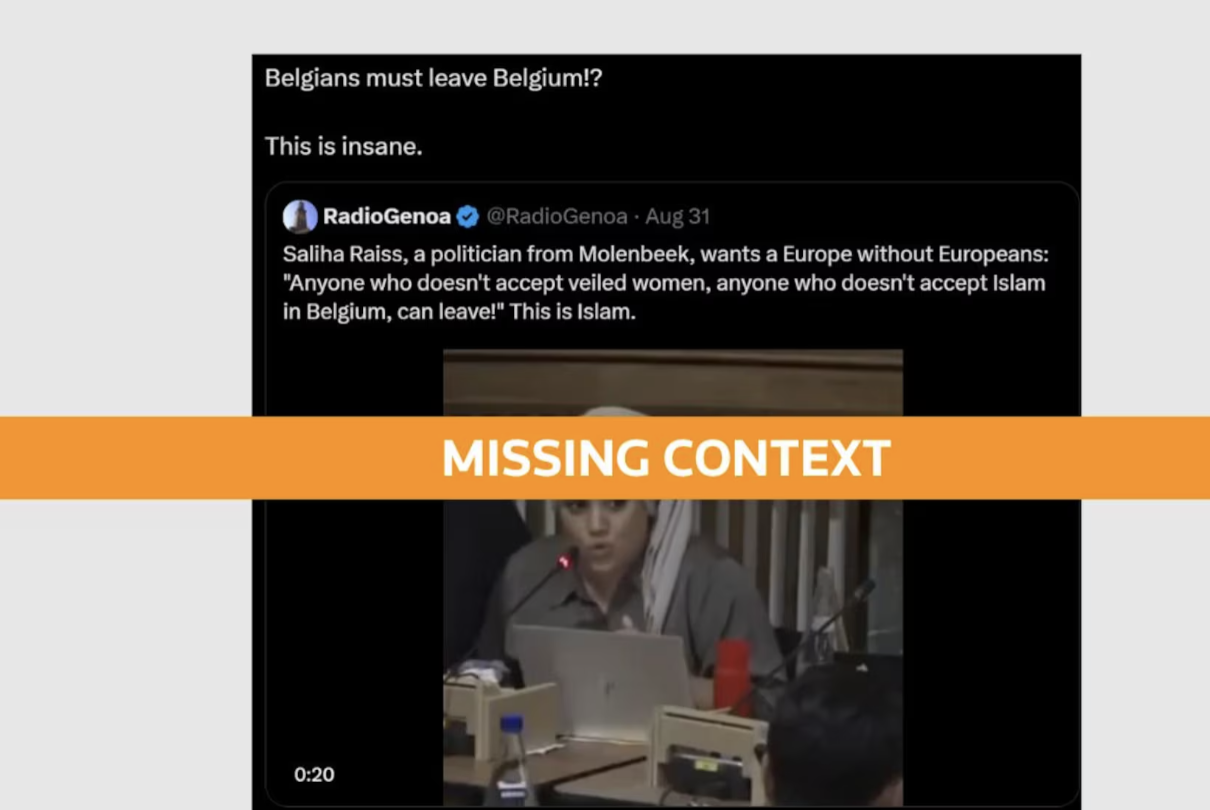
Elon Musk shared, opens new tab an identical post on X with the caption: “Belgians must leave Belgium!? This is insane.” It received more than 42 million views.
However, the video clip shows Raiss suggesting people who are annoyed by veiled women in Molenbeek, which is home to a large Muslim population, to leave and live in another of Brussels’ 19 districts, opens new tab. It does not show her calling for Belgians to leave Belgium or Europeans to leave Europe.
Raiss, wearing a turban, opens new tab, spoke in French but her comments translated into English read: “And if these people who wear curtain fabrics [referring to Islamic headscarves] – I can give the references if you want because apparently it arouses a lot of interest – if we disturb that much, if they don’t even want to see us anymore, I mean the region has 19 municipalities, if in Molenbeek apparently it’s very unlivable, change sides, go somewhere else! Get out!”

Italy targets deficit to fall to 3% this year despite sluggish growth

Failed Founder or Fake Whistleblower? The Curious Case of Sandeep Gudapati of Eviris Health and Hitesh Bang of Parampara ( Flavours Of India )

Singer Zubeen Garg died in Singapore while swimming, not during scuba diving: report

UK Government seeks to tackle the “fake news” problem

Social media ban: 6 countries that don’t let you use Facebook, Instagram, Twitter or WhatsApp

Journalism or Extortion? Inside the Alleged extortion Racket of India’s “The Head and Tale media”
UK Government seeks to tackle the “fake news” problem
Social media ban: 6 countries that don’t let you use Facebook, Instagram, Twitter or WhatsApp
Journalism or Extortion? Inside the Alleged extortion Racket of India’s “The Head and Tale media”
-
 Fake Journalism10 years ago
UK Government seeks to tackle the “fake news” problem
-
 Fact Check12 months ago
Social media ban: 6 countries that don’t let you use Facebook, Instagram, Twitter or WhatsApp
-
 Alleged Journalism12 months ago
Journalism or Extortion? Inside the Alleged extortion Racket of India’s “The Head and Tale media”
-
 Fact Check2 years ago
How misinformation about Israel and Gaza has evolved in the yearlong war
-

 Investigation1 year ago
“Truth is the casualty”: How Indian fact-checkers debunked false claims during the India-Pakistan crisis
-

 Fact Check1 year ago
British castle flew Union Jack for VE Day, not flag-raising trend in August 2025
-

 Investigation9 years ago
9/11 was avenged on us.
-
 Reports12 months ago
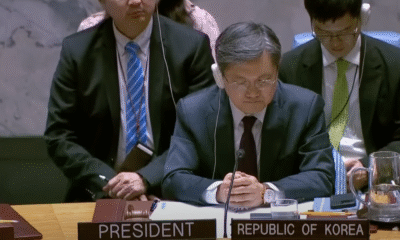
Heated UN Clash: Pakistan Confronts Israel at UN Over Osama bin Laden and State Terrorism